Introduction
Active Implantable and Wearable Medical Devices
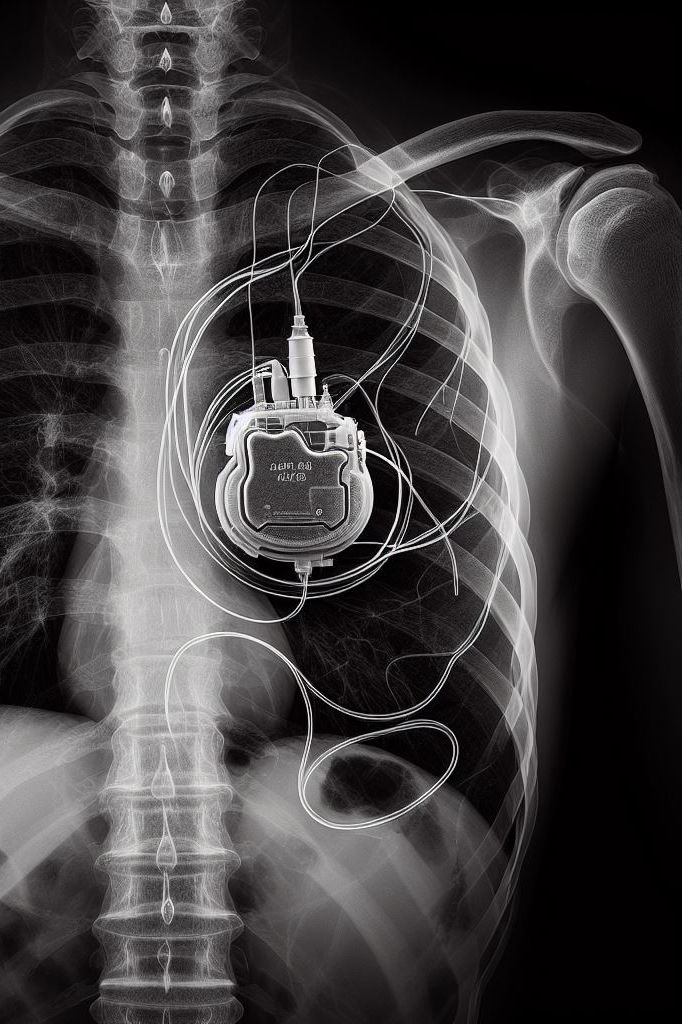
In recent years, the field of medical technology has witnessed remarkable advancements, particularly in the development and utilization of active implantable medical devices (AIMDs). These devices, ranging from pacemakers and defibrillators to neurostimulators and cochlear implants, have revolutionized the treatment and management of various medical conditions. However, alongside these breakthroughs comes the challenge of ensuring the reliable and safe operation of AIMDs in environments where electromagnetic interference (EMI) is prevalent. The presence of EMI can lead to erroneous operation or malfunction of AIMDs, which in turn can have serious consequences for patients relying on these devices for essential medical support. For instance, interference with a cardiac pacemaker or defibrillator could result in improper pacing, failure to deliver necessary therapy, or even onset of life-threatening arrhythmias.
To minimize these risks AIMDs - as medical devices - must meet a series of requirements before being placed on the market, including that relating to electromagnetic compatibility. Specifically, AIMDs manufacturers must guarantee adequate levels of immunity to EM fields (EMF), based on the recommendations of the International Commission on Non-Ionizing Radiation Protection (ICNIRP), which establish guidelines to provide protection against known adverse health effects for both occupational and public exposure to EMF. The immunity requirements of AIMDs provide a reasonable protection against EMI when the exposure levels are below the ICNIRP General Population limits.
As far as occupational safety is concerned, in EU the Directive 2013/35 on the health and safety requirements regarding the exposure of workers to the risks arising from physical agents (electromagnetic fields), establishes the maximum electromagnetic field (EMF) levels to which healthy workers can be exposed. Such levels are also based on the recommendations of the ICNIRP. According to the ICNIRP approach, more stringent exposure restrictions are adopted for the general public than for the occupationally exposed population. ICNIRP’s rationale for this approach is that the occupationally exposed population consists of adults who are generally exposed under known conditions and are trained to be aware of potential risk and to take appropriate precautions. By contrast, the general public comprises individuals of all ages and of varying health status, and may include particularly susceptible groups or individuals. In many cases, members of the public are unaware of their exposure to EMF. Moreover, individual members of the public cannot reasonably be expected to take precautions to minimize or avoid exposure.
Consequently, in the workplace, the maximum levels of electromagnetic fields allowed for the general population may be exceeded, and the risk of EMI on AIMD should be carefully evaluated.
Furthermore, the ICNIRP recommendations provide protection against known adverse health effects, but explicitly state that meeting the proposed EMF levels may not necessarily preclude interference with medical devices such as AIMDs.
Indeed, at the maximum EMF levels allowed by the INCRIP guidelines for occupational exposure, potential risks for people with an AIMD cannot be excluded. This is the reason why workers with AIMD are considered by the occupational health and safety regulation framework as a particularly sensitive risk group that must be protected against the dangers caused by the interference of EMF.
Within European regulation, a family of standards has been developed to provide procedures for risk assessment of this type of sensitive workers. Such procedures shall be followed to guarantee the safety of employees with an AIMD exposed to EMF.
Given the complexity of the topic, the procedure proposed by European standards is not always straightforward. It involves different areas of expertise (e.g., occupational health and safety experts, occupational physicians, AIMD-employee’s responsible physician, manufacturer of the AIMD), which are not trivial, particularly for small or medium-sized businesses.
In this section of the WebNir site, we provide normative references, documentation, and tools collected and developed within the BRIC projects funded by INAIL, which can support employers during the risk assessment evaluation of workers with an AIMD exposed to EMF.
Keywords: AIMD, Active Implantable and Wearable Medical Devices