Introduction
Artificial Optical Radiation
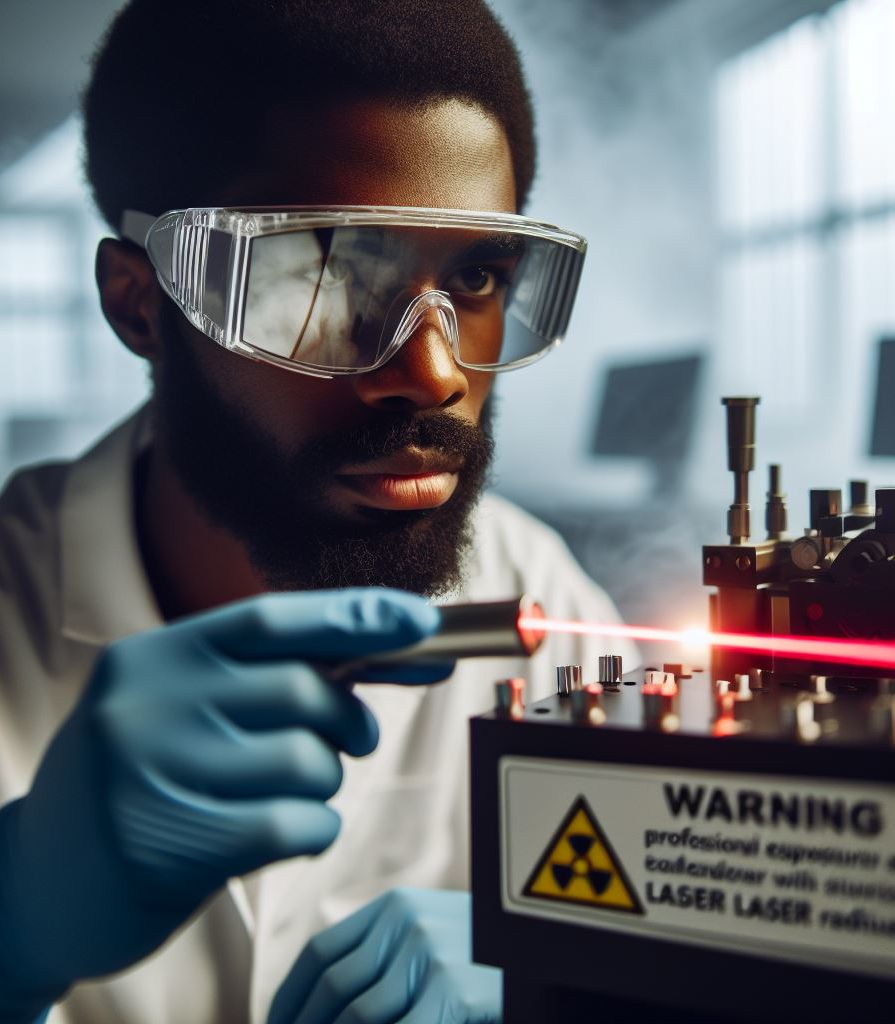
The optical radiation is defined as any electromagnetic radiation in the wavelength range between 100 nm and 1 mm. The spectrum of optical radiation is divided into ultraviolet radiation, visible radiation and infrared radiation For the purposes of protection, optical radiations are further subdivided in:
- Ultraviolet radiation: optical radiation of wavelength range between 100 nm and 400 nm. The ultraviolet region is divided into UVA (315-400 nm), UVB (280-315 nm) and UVC (100-280 nm);
- Visible radiation: optical radiation of wavelength range between 380 nm and 780 nm;
- Infrared radiation: optical radiation of wavelength range between 780 nm and 1 mm. The infrared region is divided into IRA (780-1400 nm), IRB (1400-3000 nm) and IRC (3000 nm-1 mm).
The optical radiation sources can be classified as coherent and non-coherent sources. The formers emit in phase radiations (minimums and maximums overlap) and are generated by LASERS, whereas the latters emit out of phase radiations and are generated by all the other non LASER sources and by the sun.
All the optical radiations that are not generated by the sun (Natural Optical Radiation) have an artificial origin, i.e. they are artificially generated by a device and not by the sun.
The typology of the effects associated with exposure to AOR depends on the wavelength of the incident radiation, whereas the intensity determines both the possibility that these effects occur and their gravity.
The interaction of optical radiation with the eye and the skin can have harmful consequences as reported in the following table:
| Wavelength (nm) | Type | Eye | Skin | |
|---|---|---|---|---|
| 100 - 280 | UVC |
Photokeratitis
Photoconjunctivitis |
Erythema (skin burn) |
Skin cancer
Accelerated process of skin ageing |
| 280 - 315 | UVB | |||
| 315 - 400 | UVA | Photochemical cataracts | Photosensitivity reaction | |
| 400 - 780 | Visible | Photochemical and thermal injury to the retina | Skin burn | |
| 780 - 1400 | IRA |
Cataracts
Retinal burn |
||
| 1400 - 3000 | IRB |
Cataracts
Corneal burn |
||
| 3000 - 106 | IRC | Corneal burn | ||
Besides the risks to the health arising from direct exposure to artificial optical radiation, further risks must be taken into account:
- overexposure to visible light: temporary disorders of vision, such as dazzling, temporary blindness;
- risks of fire and explosion triggered by the source itself and/or by the radiation beam.
and further risks associated with appliances/work practices that use AOR such as thermal stress, contact with hot surfaces, electrical, explosion or fire risks such as in the case of use of high power LASERs etc.
Keywords: AOR, Artificial Optical Radiation